
How the world stays open for business
For generations after the second world war, it was a safe assumption that globalisation would continue unabated. The opening of economies, technological advances, cultural exchange and political engagement ushered in one of the most expansive periods of global interconnectedness in history. Despite recent gloomy warnings, there is scant evidence that this trend will reverse.
Data from the DHL Global Connectedness Index (GCI), produced by NYU Stern’s DHL Initiative on Globalization, indicate that the movement of goods, services, capital, information and people across borders has grown steadily since the 1940s and by more than a quarter this century.
Given the disruption of the coronavirus pandemic and rising nationalist and populist movements around the world, many have opined about the imminent rise of autarky and the end of globalisation as we know it.
But we have yet to see a turning point. Despite a slowdown after the 2008-09 financial crisis and a brief sharp drop in the aftermath of the pandemic, the GCI and other indexes point to a rebound in globalisation’s flows. The volume of world trade in goods is 5 per cent above pre-pandemic levels, and most other flows are recovering swiftly, apart from movements of people, muted by travel restrictions.
FT Executive MBA ranking 2021 — top 100

Find out which schools are in our ranking of EMBA degrees. Learn how the table was compiled.
So what did pundits get wrong? They misunderstood the resilience and slow-changing nature of the political, economic and social institutions that support existing trends.
Despite anti-globalist populist political movements, meaningful action has only come on the margins. Increases in tariffs led to frictions and raised costs associated with exchange, but they did not stop trade. Brexit made the relationship between the UK and the EU fraught, yet much effort has been made to avoid harming critical exchanges.
Rather than walk away en masse from bilateral and multilateral trade agreements, over the past few years countries have struck new trade agreements in Asia, Africa and around the Pacific Rim, while Nafta was renegotiated.
With the exception of Brexit there have been few long-term policy brakes on flows of people. A recent UN review found 10 times more countries loosening immigration policies than restricting them. While the US, the UK and the EU are becoming slightly less immigrant-friendly, they remain attractive for all types of human flows: legal and illegal immigration, extended study and tourist visits. Countries such as Canada, Australia and UAE have, in some ways, become more welcoming and filled the gap.
As for information flows, while regulation of Big Tech is growing, there is multilateral action to enhance data transfers, which are increasingly included in trade pacts. Data policies often reaffirm privacy protection yet also recognise the importance of cross-border communication.
The economic systems, structures and paradigms of the post-second world war liberal economic order remain relatively intact. The hegemonies of the US dollar and US-led institutions continue despite repeated attempts to develop viable alternatives. Multilateral organisations such as the WTO, IMF and World Bank continue to provide critical infrastructure and support for economic exchange.
China created the China Development Bank and spearheaded the Asian Infrastructure Investment Bank. Yet they are dwarfed by the World Bank and the IMF, their more broadly supported brethren. Developing countries advocate for more influence at global financial institutions, but the fundamental functions of those bodies have not changed.
In a world where globalisation was moving in reverse, we would expect to see more economic decoupling. Yet the overall health of the global economy continues to be influenced by consumers, banks, companies and entities in the world’s largest and wealthiest economies, including domestic US interest rate policy and central bank activity.
Even the emergence of China as an economic power has helped expand the globalisation pie. As long as developing countries continue to adhere to economic openness as a path to growth and prosperity, following the lead of China, South Korea and Japan, globalisation is unlikely to falter.
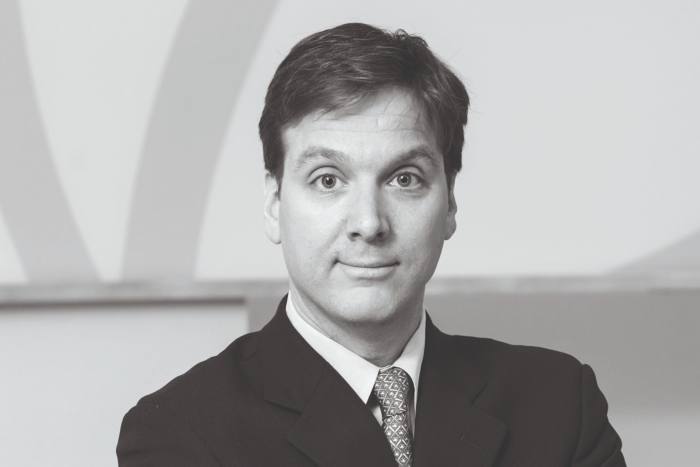
Robert Salomon is professor of international management and vice-dean of executive programmes, NYU Stern School of Business
Socially, a decline in globalisation would likely be preceded by shifts in sentiment, with people increasingly disapproving of foreigners and rejecting foreign cultures. Yet a Pew Research Center study shows that most countries view immigrants as a source of strength, and a recent survey by US News indicated the majority of the world’s population sees substantial value in global exchange.
Globalisation has thus far endured recessions, a pandemic and political nationalism. What would it take for that to change? Indicators would include political action that increasingly mirrors rhetoric, eroding confidence in the multilateralism that undermines multilateral institutions, the decoupling of the world’s economies and significant changes in social sentiment. Unless we see such shifts, expect globalisation trends to continue, though perhaps at a slightly slower rate.
Globalisation’s strength in the face of significant threats highlights the need to dig deeper to understand social, political and economic institutions, how they are likely to evolve over time and the data that underpin them.