

What is Content Distribution and How Does it Differ from Content Promotion?

Content is king.
Yet, even the king needs to deliver messages the right way. In today’s digital age of ever-available, consumable content, a solid strategy for content delivery is a must, with these two tactics leading the way: content distribution and content promotion.
Too often seen as interchangeable, there is a difference, and it’s important to understand what each means. In addition, while these are inherently different processes, both can be extremely valuable to an inbound marketing plan.
So, what is content distribution? And, what is content promotion?
CONTENT DISTRIBUTION refers to targeted sharing of your content with specific audiences on primarily owned channels (website bots and messengers, emails, groups, etc.), ensuring the right contacts receive the right messaging.
CONTENT PROMOTION is generally less targeted and refers to sharing content in a public place so that anyone and everyone finds it, expanding your brand awareness. These are typically on earned and paid channels (social media, syndication, etc.)
Here’s an example to help explain:
Say you’re hosting a 30th birthday party for a friend, Mitch, and you want this to be the most memorable party of his life. After naming it “Mitch-A-Palooza” (you’re so original!), you devise two different strategies to spread the word.
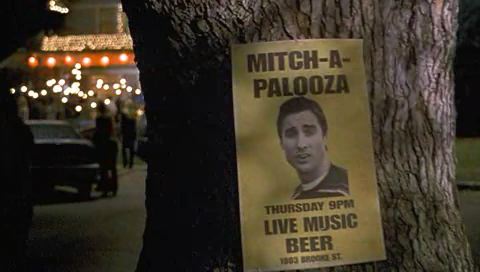
First, you hit social media, creating a Facebook event, updating Instagram, and sending tweets telling your friends and followers about the party. Then, print some flyers and hang them up around town.
Next, you invite Mitch’s close friends. Rather than letting them hear it through the grapevine, you take the initiative to send out personalized email invitations. Mitch’s girlfriend? Check. Mitch’s disc golf buddies? Check. Mitch’s cool coworker? Check. These are the people Mitch wants to see there the most, so you’ve taken the time to invite them personally.
RELATED: Best Content Promotion Strategies
The Biggest Difference Between Content Distribution and Content Promotion
How you target your audience and provide them with information is the biggest difference between content promotion and content distribution. With a content promotion strategy (your first strategy in promoting Mitch’s party), the objective is to share the content in a public place so that anyone and everyone finds it. There’s no targeting involved; it’s a message blast to the masses.
With content distribution (your second strategy above), the objective is much different. Instead of sharing info with everyone — and hoping for engagement — the content is sent to a specific person or list of people. It’s a very targeted approach, being careful to ensure the right contacts get the right content.
Examples of Content Distribution and Content Promotion
So, you know how the two most common strategies are used to promote a party, but what about a more realistic example for complex B2B companies?
Content promoting is most commonly done across social networks using posts and updating a company’s public profile so fans and followers can share content. We’ve seen these a million times, and they often look like this LinkedIn example:
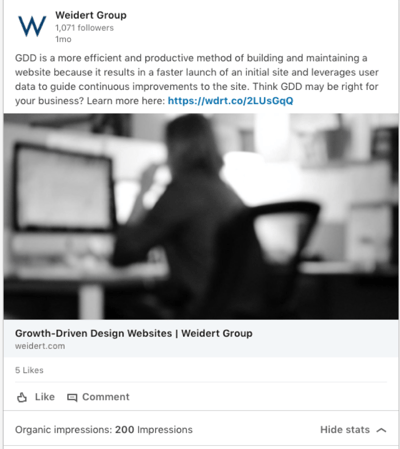
You can crank up the effectiveness of content promotions by adding video. Brief (15- to 25-second) videos can be created with a relatively low budget and don’t necessarily require shooting; perhaps animated copy, simple graphics, and a voiceover could do it. These videos could also be added to an email signature.
Now, take existing content and revamp and republish it. Blogs, infographics, videos, social media posts, etc. can all be syndicated. Just make sure to include a caption or statement that links the original content.
For content distribution, companies lean heavily on email. Slice up your email database into different segments and tailor email content to those individual groups.
Send outreach emails to companies, services, or tools that you featured in your content, asking them to share it with their audiences (and thanking them for their contribution, of course). Here’s how to do it.
Marketing automation software, such as HubSpot, can help you scale your content distribution efforts by sending automated yet personalized emails to contacts — a crucial component of any lead nurturing strategy. Here’s an example:
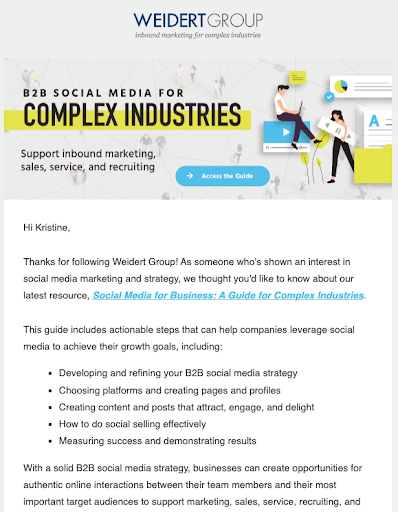
Other content distribution methods — target online trade groups or even sending direct mail as part of an ABM campaign — allow for specific contacts to be targeted, detailed messages to be crafted, and personalization tools used to deliver individualized messages to every recipient.
LinkedIn also offers InMail, a premium account feature that lets you directly message other LinkedIn members that you’re not connected to. A basic (or free) account only lets you directly message your connected LinkedIn members.
RELATED: TOFU, MOFU & BOFU: Serve up the Right Lead Nurturing Content
Which is Better for Generating Leads?
All of your efforts come down to generating new business. So, which one — content distribution or content promotion — provides more sales leads?
You can make arguments for both sides, but it likely doesn’t surprise you to hear that the best strategy is a mix of both tactics. Not only is it important to promote your content on various social networks, but it’s just as important to distribute your content to targeted contacts. This way, you’ll be able to both maximize your exposure and get your content in front of the people who want to see it the most.
With today’s oversaturation of noise in the content marketing world, distribution and promotion are vital to ensuring content doesn’t get lost in the shuffle. With visibility and value being the two main elements of successful content marketing, make sure your content remains king. And, may your own “Mitch-A-Palooza” be memorable.
Make the most of inbound marketing by consuming this valuable content: How to Improve Your Inbound Marketing Efforts is a guide you don’t want to miss. Click below for instant access.
Fiverr
